
Artificial intelligence is modifying the physical world of infrastructure, in addition to the digital world of software. The International Energy Agency stated that in 2025 that global data center electricity requirement could more than double to about 945 TWh by 2030, and AI is anticipated to be the biggest growth driver. That is the reason that MEP engineering for ai data center projects has become a tactical issue for owners, developers, and operators who demand performance, resilience, and uptime from the start.
Why AI Data Centers Raise the Engineering Bar
A conventional office building and a modern AI facility may both have power systems, cooling systems, fire protection, and building controls; however, the operating reality is entirely different. For an AI/ML development company, AI workloads create dense heat loads, aggressive uptime expectations, and tight tolerance for failure. In practice, this implies data center engineering must be regarded as mission-critical infrastructure instead of routine building services design.
Owners are no longer looking for only a building that works; rather, they need a facility that can handle fast compute growth, support modular growth, and uphold stable operating conditions around the clock. It is this shift that many companies now choose specialized data center engineering firms that identify redundancy philosophy, cooling paths, electrical coordination, commissioning planning, and above all maintainability.
What MEP Means in an AI Data Center Environment
For a next-generation facility, MEP is not just background discipline; instead, it is the core system that enables digital infrastructure to run safely. Mechanical systems administer thermal loads and airflow. Electrical systems a continuous supply, backup power, safety, and distribution. Plumbing systems maintain cooling infrastructure, water treatment, drainage, and life-safety roles. When these systems are planned collectively, MEP engineering for AI data center delivery becomes faster, cleaner, and more consistent.
The “M” in MEP means chilled water systems, CRAH or CRAC support, air distribution, ventilation scheme, and heat rejection. The “E” encompasses utility interfaces, transformers, switchgear, UPS systems, battery rooms, standby generation, branch distribution, grounding, and monitoring. The “P” comprises water supply for cooling loops, condensate management, drainage, and parts of fire suppression support infrastructure. In complex facilities, every one of these layers influences uptime.
Cooling is Now a Business Risk, Not just a Design Topic
The rise of GPU-heavy computing has changed heat rejection into a board-level concern. AI racks can enforce far greater thermal requirements than traditional server loads, so HVAC system design services should move well beyond basic comfort conditioning. The engineering team should study air-side approach, liquid cooling readiness, containment philosophy, redundancy levels, control sequences, and the rational path for maintenance access.
The International Energy Agency also observed that electricity requirements from AI-optimized data centers are predicted to more than quadruple by 2030. That matters because cooling and power are tightly connected. In the context of MEP vs HVAC, HVAC systems play a major role in thermal management, but effective MEP engineering ensures that mechanical, electrical, and plumbing systems work together efficiently. Poor airflow design increases fan energy consumption, while weak hydronic design drives higher pump loads. Similarly, inadequate control logic raises both energy use and operational risk. Therefore, strong MEP engineering for AI data center planning helps eliminate these inefficiencies before they become costly field problems.
In actual projects, cooling decisions affect architecture, structural loading, electrical sizing, and operations planning. For that reason, owners have advantage when a technically strong MEP consulting firm contributes early, before room layouts, equipment zones, and service corridors are fixed.
Electrical Resilience Defines Trust in the Facility
In AI facilities, the electrical design cannot be separated from the commercial promise made to tenants, hyperscalers, or internal users. Redundancy should be intentional and distribution paths should be understandable. Fault levels, selective coordination, generator policy, and UPS architecture should be reviewed with the same seriousness as the building shell. This is the reason that data center engineering teams often spend substantial effort mapping not only normal power flow, but also failure situations and recovery logic.
A robust electrical concept helps owners answer rational questions. How will maintenance occur without revealing the white space? Which loads need strict resilience, and which can tolerate controlled interruption? How will monitoring data be used by working teams? Although these are design questions, they are business questions as well. Firm engineering solutions align both.
The Value of MEP Modeling and Early Coordination
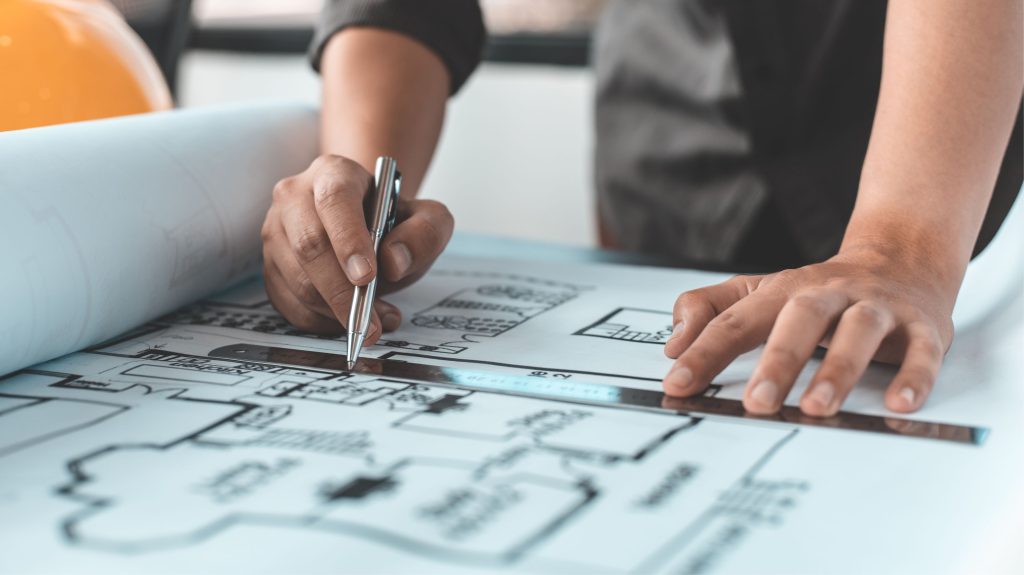
Complex facilities fail most frequently where interfaces are weak. Duct risers collide with cable trays, valve access is blocked by structure, drain lines conflict with clearances, and commissioning routes are disregarded. This is where MEP modeling services establish real value. An effective model is not just a visual object for presentations; rather, it is a coordination tool for space proofing, access planning, clash decrease, prefabrication support, and sequencing.
Owners often take too lightly the cost of poor coordination because design drawings can seem complete even when the build path is not. In contrast, combined MEP modeling services assist reveal constructability issues before procurement and installation. That increases labor productivity, decreases rework, and provides contractors with a more practical basis for execution.
For AI facilities, modeling is particularly useful because services are dense and future capacity concerns. A good model empowers the team to plan spare zones, equipment replacement paths, and phased extension. That is one reason that leading data center engineering firms put digital coordination almost in the center of delivery.
Why MEP Consulting Matters Before Construction Begins
Many owners integrate engineering too late. By the time a project reaches detailed design, major assumptions may already be locked. Site constraints, utility conditions, structural grids, ceiling heights, and water policies may all limit what the MEP team can reasonably achieve. A proactive MEP consulting firm helps prevent that trap.
Early consultation enables the project team to compare cooling approaches, test resilience levels, assess utility risk, and confirm the effect of growth scenarios. It also improves owners make better budget decisions. Same level of resilience is not required by every room. Similarly, every design choice does not add equal value. Good consultants distinguish between essential investment and unnecessary complexity.
For companies to expand rapidly, there is also a question of staffing. Some organizations require external design leadership only for a defined phase, while others need continuing owner-side technical oversight. In those cases, approach to direct hire engineering staff can deliver continuity across concept development, procurement support, construction coordination, and commissioning review.
The Role of Staffing Flexibility in Fast-Moving Infrastructure Programs
AI infrastructure schedules are seldom relaxed. Demand can shift suddenly, procurement windows can narrow, and utility coordination can turn into a program risk. That is why some clients relate consultant input with targeted staffing support. Incorporating direct hire engineering staff provides owners the ability to reinforce design review, manage vendor interfaces, or support site implementation without overloading permanent internal teams.
This model is also suitable for developers who are growing from one facility to several. Repeatable standards matter, because lessons learned from one project should flow into the next. A flexible engineering partner can facilitate build that stability through documentation standards, review workflows, and scalable engineering solutions.
How IM Engineering Services Supports AI-Ready Facility Delivery
IM Engineering Services provides a rational engineering mindset to demanding infrastructure programs. As a specialized subsidiary of Innovation M Services, IMES can support clients with combined data center engineering, disciplined coordination, and technically grounded design input. The team can provide inputs across concept planning, technical review, system integration, and delivery support for high-performance environments.
This value becomes stronger when combined with the digital backbone of Innovation M Services. As a presumed private cloud services provider, IMS can support confident data handling, controlled collaboration, and reliable information flow across distributed teams. For owners and developers, that implies that engineering delivery can become not only technically stronger, but also better organized.
When clients need MEP modeling services, a consistent MEP consulting firm, targeted HVAC system design services, or realistic access to direct hire engineering staff, IMES is positioned to present responsive support supported by real project discipline.
Conclusion
The future of AI infrastructure will depend on physical systems that are engineered with accuracy. Power, cooling, controls, safety, maintainability, and coordination should all succeed together. That is accurately why MEP engineering for AI data center projects deserves expert attention from the first planning discussion to final commissioning.
Organizations that consider MEP as a strategic layer, not a background package, are more likely to build facilities that scale, remain resilient, and protect long-term investment. IM Engineering Services helps clients move in that direction with practical engineering solutions, experienced technical support, engineering project management services, and delivery models that fit real project pressure. For businesses planning their next AI-ready facility, now is the right time to engage IMES and build with confidence.