
Imagine the position of project manager managing a multimillion-dollar construction project; having tight deadlines, multiple subcontractors, shifting designs, and above all a client who wants full visibility into everything. The pressure is overwhelming if s/he has to open multiple software/dashboards, copy reports and merge them in a single presentation often. ON the other hand, if s/he is using BIM, s/he opens the laptop, launch the design software, and what s/he sees isn’t just a blueprint; it’s a living, breathing model of the building. Every wall, every pipe, every electrical conduit is displayed in front of manager in a fully interactive 3D environment. That’s how BIM is reshaping the construction industry.
From Chaos to Clarity
Construction teams mostly juggled multiple 2D drawings, spreadsheets, and constant email threads before the introduction of BIM. One major problem was miscommunication among different teams and even within the teams. The results had been delays budget overruns most of the time. The construction teams were always trying to stay aligned with shifting goals and limited visibility because architects designed in isolation, engineers interpreted those designs, and contractors did their best to execute them. That gap between design and execution created chaos. Building Information Modeling (BIM) set out to solve all those issues.
BIM in Action
BIM was first introduced into a mid-rise commercial project; contractors’ reaction could not be predicted. Varied reactions were observed by different contractors; some were doubtful, and others were questioning. But once they saw the data-rich 3D model on screen (complete with quantity takeoffs, real-time updates, and coordinated layers of MEP, structure, and architecture); they started using with keen interest. Their response was like “Suddenly, we were all working from the same source of truth”.
Planning with Confidence:
One of the most immediate benefits of BIM in construction is its capacity that users can visualize every part of a project before construction starts. BIM has made life easy for all stakeholders of construction like architects no longer needed to explain conceptual designs. Instead, they showed clients a walkthrough. Similarly, Civil engineers can map topography and infrastructure with accuracy. Teams use digital construction technology to simulate construction sequences and are able to detect potential issues early
Lastly if the client asks, “Can we see what this would look like with a different roofline?” BIM can show them in minutes.It’s more than just design; it’s construction planning with BIM that’s guided with data and built for agility.
Collaboration, Not Just Communication
In a traditional workflow, a beam conflict may be noticed a week before it’s installed by the structural engineer. In BIM, the system signals clash detection at the time of its modelling.
It shows the power of collaborative construction workflows. Every member of construction team—architects, engineers, contractors, and even facility managers have access to edit the same model in real time. Tools like Autodesk Revit and BIM 360 have changed the role of teams; once working in silos into a coordinated team.
A last-minute design change on one floor automatically updates MEP layouts, equipment clearances, and material quantities across the model. It has eliminated email chains, manual edits and hence delays.
Controlling Costs
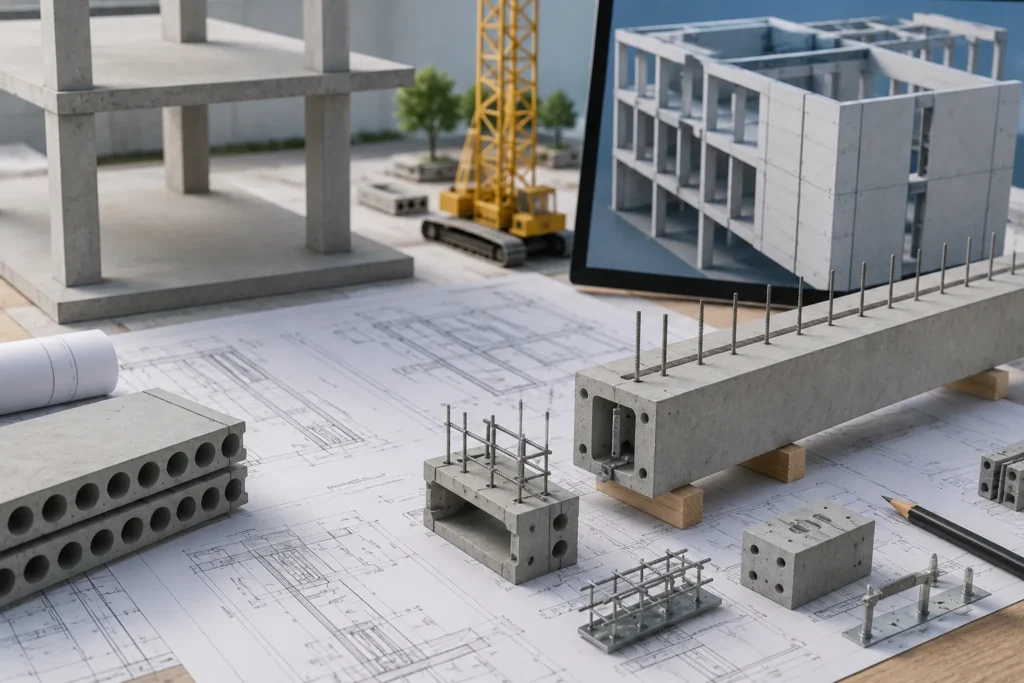
One of the strengths of BIM is cost control, which is mostly underestimated. BIM links each modeled component to real-time cost files, thus enabling them to generate highly accurate quantity takeoffs and budget estimates. Guesswork is eliminated. If a change is suggested like switching from steel to precast; the costs are adjusted instantly.
Contractors consider BIM as game changing because of its level of precision. It allows them plan, budget, and purchase with confidence. Clients, too, feel more in control when they can see the direct impact of design choices on the project budget.
Staying on Schedule (Really)
Delays in construction are the reality in almost all projects. But with BIM-enabled 4D scheduling, every job of the is connected to a model element and timeline. One can visualize the entire project’s chronological sequence of construction even before breaking ground.
The ability allowing to run “what-if” situations and adjust the build order in one of the larger developments. The team can identify potential conflicts weeks in advance and can reschedule covering weather impacts. As a result some teams shaved as much as 14 days off the original project schedule.
BIM for the Full Lifecycle
One important thing that people often ignore is that BIM isn’t just for construction. It also predicts what comes after. It means that the same model can become the core of facility management, giving operators access to manuals, maintenance schedules, and asset data for years to come. Instead of going through grimy plan sets or outdated spreadsheets, building owners have a full digital twin at readily available. That’s why it is often said that BIM is not a tool; it’s a lifecycle strategy.
More Than Just Buildings: Infrastructure, MEP, and More
BIM’s reach is not limited only to buildings. Other structures like roads, bridges, tunnels and water networks also use BIM for infrastructure projects for solving complex challenges by incorporating environmental, geographic, and structural data. It has become essential for public works and smart city planning also.
And when it is used in MEP engineering, the model-based approach make sure systems are fully coordinated, reducing rework and improving performance. In all projects whether it’s an airport or an office block, 3D modeling in construction is no longer remained a luxury rather it’s a necessity now.
A Smarter, More Sustainable Way to Build
From the above discussion, it is clear how BIM reduces waste, supports lean construction, and encourages sustainable building design. It’s not just to show different pieces of information on a screen; it’s about building smarter, more responsibly, and with greater assurance. Today technology-driven practices have evolved, as construction moves toward more integrated and BIM stands at the center of this evolution.