
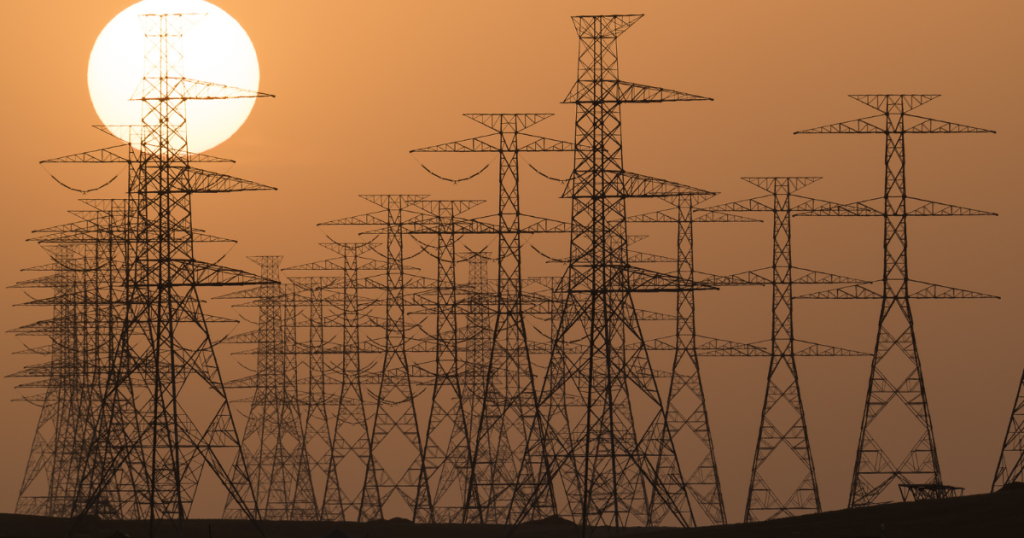
Transmission lines are vital for the clean distribution of power from generation facilities to industries, companies, and residences. These high-voltage lines provide the foundation of energy distribution networks, which then enable reliable and long-distance power transmission. Their design requires great engineering knowledge, meticulous preparation, and advanced technology to ensure durability, safety, and performance.
Exploring the technologies driving its future, this blog delves deeply into the fundamental elements of transmission line design and shows how Innovation M Engineering Services is changing the scene with clever engineering solutions.
What is Transmission Line Design?
The whole process of designing and engineering the systems that distribute electric power over great distances is called transmission line design. Route analysis, material choice, structural support design, and electric load computations are among them. The aim is to make sure structural integrity, environmental conformity, and energy efficiency are maintained while maximizing cost and long-range dependability.
Key Components of Transmission Line Design
Route Selection
One of the most important stages in creating a transmission line is choosing the appropriate path. Topographical features, land ownership, environmental damage, and urban development ideas all need to be considered by an engineer. The perfect path reduces construction problems, steers clear of sensitive or high-risk neighborhoods, and guarantees cost-effective deployment. Modern technologies like satellite pictures and GIS really help to assess many possible courses for best results.
Voltage Level & Conductor Type
Matching the power load demand and reducing transmission losses depend on identifying the right voltage level. Greater voltage lowers current, therefore reducing energy loss from resistance. Equally vital is the selection of conductor materials that are light, corrosion-resistant, and high-capacity, such as ACSR (Aluminum Conductor Steel Reinforced) or AAAC (all-aluminum alloy Conductor).
Tower Design
To bear the weight of the conductors and endure environmental stresses such as severe winds, earthquakes, and ice loads, transmission towers must be structurally sound. To keep safety and performance, designers consider mechanical loads, tower spacing, and needed clearances. The line layout and ground determine which tower types suspension, tension, and transposition will be used. Engineers use special software to provide the long-term strength of towers and ensure they meet safety regulations.
Insulation & Grounding
Good insulation is especially important in high-voltage conditions to prevent power loss, arcing, and electrical breakdowns. Voltage level, pollution severity, and local weather are among the factors affecting the selection of insulation materials. Grounding systems are also designed to prevent overload, short circuits, and lightning from passing more current down into the earth. Reducing transmission line errors is dependent on these systems improving the safety of equipment and staff.
Environmental & Regulatory Compliance
Designers must check that the project adheres to every local and global environmental legislation and energy standard before building happens. This entails getting required approvals, community meetings, and doing Environmental Impact Assessments (EIA). Particular focus is paid to safeguarding wildlife, wetlands, habitats, and historic monuments along the way. Compliance not only guarantees sustainability but also shields the plan against local opposition and legal holdups.
Modern Technologies in Transmission Line Design
Computer-Aided Design (CAD)
Engineers can produce precise 3D models of transmission towers, lines, and substation layouts, thanks to CAD software. It helps to see the ultimate vision before the physical building and to plan carefully. CAD software also allows for fast modifications during design cycles, therefore saving on cost and time.
GIS Mapping & LIDAR
Surveying wide regions with great precision depends on GIS (Geographic Information Systems) mapping and LIDAR (Light Detection and Ranging). This software gives engineers real-time topographical information so they can plot ideal paths and circumvent environmentally vulnerable locations.
Structural Analysis Software
Load conditions, weather effects, thermal expansion, and other forces acting on transmission structures are simulated by programs like PLSCADD, SAP2000, and ETAP. Engineers can experiment with various design cases and base their choices on data using these software.
Digital Twin Technology
Virtual replicas of actual transmission lines and their corresponding components are called digital twins. By letting engineers simulate performance, spot any possible flaws, and plan maintenance operations ahead of time, these models reflect actual behavior. Utility companies can enable predictive maintenance, lower downtime, and lengthen asset life by keeping the digital twin constantly updated with current information.
Challenges in Transmission Line Projects
- Right-of-way acquisition and land disputes
- Rough weather delaying setup and operation
- High starting expenses and long approval timelines
- Managing power losses over long distances
These challenges require strategic planning, robust engineering practices, and technology-driven approaches.
Innovation M Engineering Services: Transforming Transmission Line Design
With an emphasis on accuracy, creativity, and sustainable engineering, we are revolutionizing transmission line design at Innovation M Engineering Services.
Advanced Route Optimization
We support customers in selecting the most effective and environmentally friendly transmission line routes using GIS, LIDAR, and terrain analysis software. This increases acceptance times while lowering cost and environmental disturbance.
Custom Tower and Structure
Design Creating custom tower designs ideal for particular load conditions and geography is the forte of our engineering staff. Advanced simulation tools help us create several stress scenarios to guarantee optimal durability.
Smart Technology Integration
We incorporate state often heart technologies, including digital twin systems, real-time performance monitoring, and AI-based fault detection. The approaches support predictive maintenance, lower risk, and cut the total project life cycle cost.
End-to-End Engineering Support
We provide full-cycle support, from feasibility studies and legal compliance to construction supervision and ultimate commissioning. Thanks to our seasoned project managers and engineers, projects are finished on time and with high standards.
Sustainability and Adherence
Innovations M stresses green engineering methods and rigorous compliance with safety and environmental standards. Our answers not only work well but also are futureproof, therefore guaranteeing long-lasting advantages for communities and customers.
Why Partner With Us?
- Decades of shared knowledge of power systems
- Access to tools and cutting-edge design software
- Experts specially qualified with international projects experience
- Proven history of offering scalable and dependable solutions
Conclusion
A resilient, future-ready power system relies on strong transmission line design. As the world moves toward renewable integration and smart grids, the importance of innovative and sustainable design grows even more. Advanced technology and expert engineering can make transmission systems more cost-effective, eco-friendly, and efficient. Innovation M Engineering leads the way in delivering such impactful solutions