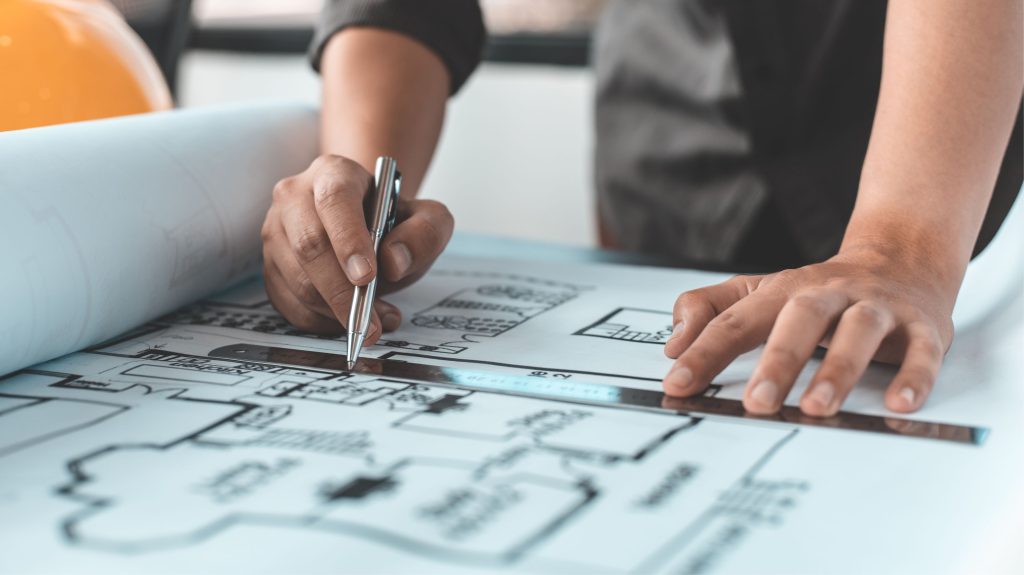


Modern construction world has changed the concept of a building construction. It is no longer just its architectural design and structural framework because beneath the walls, above the ceilings, and behind the scenes lies a complex network of systems that breathe life into space, making it safe, comfortable, and functional. Taking care of all these items is MEP engineering.
It is important to think about what MEP engineering is and how it works. The central point of MEP engineering is the discipline of integrating Mechanical, Electrical, and Plumbing systems into building design. It is science and art which ensures that air flows where it should, electricity reaches every corner safely, and water is delivered and removed efficiently. If, we take out MEP, buildings would be little more than empty shells which may be impressive from the outside but lifeless within.
Unlike the common assumption, the role of MEP engineering spreads far beyond simply installing heating units, running electrical wires, or fitting pipes. It includes specific planning, sophisticated design, coordination with multiple disciplines, and a deep knowledge of safety codes, energy efficiency, and sustainability goals. For all types of structures, whether it’s a residential apartment, a commercial tower, a hospital, or an industrial facility, MEP systems are the heartbeat of every structure.
The Meaning Behind MEP in Engineering
The term MEP is an abbreviation for three distinct but interrelated fields. Mechanical includes heating, ventilation, air conditioning (HVAC), and other climate control systems that regulate temperature to ensure indoor comfort. Electrical involves the design and distribution of power, lighting, communication systems, and safety devices. Plumbing involves the installation and maintenance of water supply, drainage, gas piping, and fire suppression systems.
Each of these areas is a specialized discipline, but when they act collectively, they form the lifeline of a building. The role of a mechanical electrical plumbing engineer is to bring these systems together in a way that is effective, dependable, and seamlessly integrated into the building’s architecture.
The Role of a MEP Engineer
The role of an MEP engineer is more than just being a designer; they are problem solvers, system integrators, and quality guardians. They start their work early in the project, frequently during the conceptual design phase, to find out the best way to integrate systems without clashing with architectural or structural elements.
They make detailed plans, calculate loads, select equipment, and synchronize with architects, civil engineers, contractors, and subcontractors. Their responsibilities involve supervising installation, ensuring compliance with codes and standards, and testing the systems before handing them over to the client. Basically, they bridge the gap between design vision and operational reality.
Why MEP Engineering Matters
MEP engineering is important because it directly affects the health, safety, and comfort of building occupants. Properly designed MEP systems make sure that:
- Clean water flows in and wastewater flows out and during this process there is no risk of contamination.
- Buildings are well-ventilated and heated, or cooled as required.
- Electrical power is distributed safely and dependably everywhere.
- Operational fire protection systems are in place.
MEP engineering plays a major role in functionality as well as sustainability. The focus of Modern MEP design is on reducing energy consumption, minimizing water waste, and integrating renewable energy sources, thus making buildings not only comfortable but also environmentally responsible.
Mechanical Systems: The Climate Control Backbone
Mechanical systems in MEP engineering focus primarily around HVAC i.e. heating, ventilation, and air conditioning. The functions like indoor air quality and thermal comfort, which is vital in regions with extreme weather conditions, are maintained by these systems.
Mechanical engineers are responsible for designing solutions that balance efficiency, cost, and performance for all installation from large chillers and boilers in commercial complexes to compact split systems in residential units. They also focus on ventilation to ensure fresh air supply and the removal of contaminants, and increasingly they integrate renewable energy systems like geothermal heat pumps.
Electrical Systems: Powering the Built Environment
Electrical systems act like veins in the human body through which the blood circulates. Similarly, lifeblood of modern buildings i.e. electricity flows through electrical systems. In MEP engineering, electrical design involves everything from the main power distribution to the smallest lighting fixture. It also includes emergency systems such as backup generators and uninterruptible power supplies (UPS).
A well-designed electrical system delivers power, assuring safety through grounding, circuit protection, and fire alarm systems. With the rise of smart buildings, As smart buildings are increasingly being constructed; MEP electrical engineers also need to integrate advanced automation systems, energy monitoring tools, and data networks.
Plumbing Systems: Delivering and Removing Water
Plumbing in MEP engineering is not limited to sinks and toilets; it incorporates all systems that move fluids in and out of a building, including potable water supply, drainage, stormwater management, gas piping, and fire suppression.
The design should ensure proper water pressure, efficient drainage, and compliance with sanitation standards. In the modern environmental friendly building, plumbing engineers are also integrating water conservation features such as greywater recycling and rainwater harvesting.
The MEP Design Process: From Concept to Commissioning
Designing mechanical, electrical, and plumbing systems is not just a one-step task; instead, it’s a carefully staged process that moves from broad concepts to specific, detailed plans, and finally to real-world implementation. Only that MEP design is considered successful which ensures that these systems work together in harmony, meet all regulatory requirements, and operate efficiently throughout the building’s lifecycle.
We, at Innovation M Engineering Services, follow an organized approach to the MEP design process, ensuring that every detail from the initial idea to the final handover is carefully considered.
1. Pre-Design and Project Understanding
Every great MEP project starts with appreciating the client’s needs, the building’s purpose, and the site conditions. In this stage, MEP engineers:
- Conduct feasibility studies to evaluate project viability.
- Review architectural plans and structural layouts.
- Identify energy efficiency goals and sustainability targets.
- Establish preliminary budgets and timelines.
When there is early collaboration with architects and stakeholders, it ensures that the MEP scope is allied with the overall vision of the project.
2. Conceptual Design
The conceptual design phase begins once the project scope is clear. Here, the mechanical electrical plumbing engineers outline the core system concepts as follow:
- HVAC load estimates and general equipment sizing.
- Initial electrical load assessments.
- Water demand projections and plumbing layouts.
- Integration of possibilities for renewable energy sources and advanced building automation.
Concept designs are frequently presented as schematic diagrams to aid all stakeholders visualize how the systems will fit into the building.
3. Design Development
In the design development stage, ideas are transformed into detailed solutions. Engineers generate precise layouts, refine system calculations, and specify major equipment.
- Mechanical systems: Detailed ductwork routing, HVAC zoning, equipment selection.
- Electrical systems: Circuit diagrams, lighting plans, distribution boards, safety systems.
- Plumbing systems: Pipe sizing, routing for water supply, drainage, and gas systems.
Building Information Modeling (BIM) tools are often used at this stage, for clash detection, thus ensuring that mechanical ducts, electrical conduits, and plumbing pipes don’t interfere with each other or the building’s structure.
4. Construction Documentation
After finalizing the design, the focus of the team shifts to producing construction documents which involve the detailed blueprints contractors will follow during installation. This includes:
- For each MEP discipline comprehensive drawings.
- Technical specifications and details of equipment and materials.
- Document of compliance details for local building codes as well as international standards.
Clear, accurate documentation reduces misunderstandings during construction and costly changes.
5. Coordination and Tender Support
MEP engineers frequently assist with the tendering process before construction starts,:
- Delivering technical support for contractor selection.
- Swotting bids to ensure compliance with design requirements.
- Contributing in pre-construction meetings to clarify design intent.
6. Installation and Site Supervision
During the construction phase, MEP consulting engineers assume a supervisory role:
- Inspecting on-site work to confirm that it matches the approved design.
- Advising on adjustments if some unforeseen site conditions come.
- Synchronizing between trades to keep the project on schedule.
7. Testing, Commissioning, and Handover
The final stage is where design turns into reality. Systems are thoroughly tested to ensure they perform as planned:
- HVAC systems undergo airflow as well as temperature tests.
- Electrical systems are tested for safety, load capacity, and redundancy.
- Plumbing systems are checked for pressure, leaks, and drainage efficiency.
Once all systems are found OK through inspection, the building is officially handed over to the client along with operation manuals and maintenance guidelines.
8. Post-Occupancy Evaluation (Optional but Recommended)
Some MEP engineering firms add a step further with post-occupancy evaluations. This includes monitoring system performance after the building is occupied to identify optimization opportunities for improving efficiency, reducing operational costs, and enhancing occupant comfort.
Why a Structured MEP Design Process Matters
By following a structured design process, MEP engineers make sure that:
- Seamless integration of systems with architecture and structure.
- Code compliance and safety adherence.
- Energy efficiency and sustainability in long-term operation.
- Cost control through accurate planning and reduced rework.
We at Innovation M Engineering Services believe that the MEP design process is the blueprint for a building’s future and we treat every stage with the precision and care it needs.
Integrating MEP with Architecture: Achieving Harmony Between Form and Function
A building’s success is measured by how well it functions and not only by how it looks. This is why one of the most critical steps in the construction design process is integrating MEP with architecture. Even the most beautiful structure can fail if its heating, cooling, lighting, water supply, and safety systems are ill planned. Conversely, even the most advanced mechanical, electrical, and plumbing systems cannot perform well if they clash with the building’s layout, aesthetics, or structural design.
Why Integration Matters
Conflicts inevitably arise when MEP design and architectural planning are developed in isolation. Air ducts may come in clash with beams, plumbing stacks may appear in the center of key spaces, or locations of electrical panels may be awkward. These conflicts result in costly changes, construction delays, and even long-term maintenance challenges.
If you integrate MEP architecture with the building’s structural and spatial design from the very beginning, it enables engineers and architects to:
- Maximize space efficiency and at the same time not compromising comfort or aesthetics.
- Ensure that MEP components remain accessible for maintenance, but they are visually unobtrusive.
- Eliminate or minimize costly rework due to clashes between building systems and structural elements.
- Support sustainability goals by optimizing routing and system placement.
Key Strategies for Effective Integration
Early Collaboration Between Disciplines
The integration process starts with early communications between the architect, structural engineer, and mechanical electrical plumbing engineer. This ensures that before finalizing the design, MEP requirements are factored into space planning, ceiling heights, and room configurations.
Use of Building Information Modeling (BIM)
BIM tools permit architects and MEP engineers to work on a single digital model of the building. This empowers real-time clash detection and helps visualize how HVAC ducts, electrical conduits, and plumbing pipes will fit into the structure without interfering with other systems.
Centralized Equipment Planning
Placing If, mechanical rooms, electrical switchboards, and plumbing risers are placed strategically, it reduces long pipe and cable runs, saving both cost and energy. For example, if you locate HVAC equipment near the center of the building, it can balance airflow and improve efficiency.
Hidden Yet Accessible Design
Although most MEP
components are concealed behind walls, ceilings, or floors, but they must remain accessible for inspection and maintenance. Integration ensures that access panels, service corridors, and maintenance points are planned from the beginning.
Optimizing for Aesthetics and Acoustics
Integration is not just about technical fit; it also refers to ensuring that MEP systems don’t disrupt the building’s visual or acoustic environment. For example, duct silencers can be used to prevent HVAC noise from affecting open office spaces.
Examples of Successful MEP Integration
- Hotels and Resorts: Seamless climate control systems which are concealed within the architecture to maintain luxury aesthetics while ensuring guest comfort.
- High-Rise Office Buildings: Electrical and plumbing risers planned in vertical shafts duly aligned with the structural grid to optimize space.
- Hospitals: MEP systems routed with redundancy and accessibility in mind, thus allowing for maintenance without disrupting critical operations.
The Role of MEP Consulting Engineers in Integration
Skilled MEP consulting engineers play their role as the bridge between architectural vision and technical feasibility. They make sure that systems like HVAC, lighting, plumbing, and fire safety are harmoniously embedded into the building fabric. Their skill helps achieve the right balance between form and function, making the building both beautiful as well as highly functional.
We at Innovation M Engineering Services, approach MEP architecture as a collaborative art. Our engineers work together with architects from day one, using advanced modeling tools for creating systems that serve the building’s purpose while enhancing its design. This assurance of integration ensures that our clients enjoy buildings that are not only visually stunning, but they are also operationally flawless.

Types of MEP Engineering Services: Tailoring Systems to Every Project
MEP engineering is not a generic discipline. Depending on the type of building and its intended use, the scope, complexity, and design priorities of mechanical, electrical, and plumbing systems vary widely. A residential apartment complex has immensely different requirements if compared to a hospital, a shopping mall, or an industrial manufacturing facility.
This is the reason that MEP engineering services are frequently specialized, with each project type demanding its own technical approach, compliance considerations, and design innovations. We, at Innovation M Engineering Services, provide customized solutions across all major sectors, which ensures that every system we design is fit for purposes, energy-efficient, and ready for future.
1. Commercial MEP Engineering
Commercial buildings that include office towers, shopping malls, hotels, and mixed-use developments require commercial MEP engineering solutions that focus on:
- Large-scale HVAC systems for comfort of occupants.
- Sophisticated lighting design for both aesthetics as well as energy efficiency.
- High-capacity power distribution networks that support business operations.
- Advanced fire protection and safety systems that are compliant with local regulations.
In commercial settings, MEP engineers also plan for flexibility, that allows spaces to adapt to changing tenant needs or future technology upgrades.
2. Residential MEP Engineering
Residential projects ranging from single-family homes to high-rise apartments involve a careful balance between performance, cost-efficiency, and occupant comfort. Residential MEP design often includes:
- Compact and efficient HVAC solutions for separate units.
- Safe and reliable electrical wiring provides adequate circuit protection.
- Plumbing systems which are designed for consistent water pressure and minimal waste.
- Smart home integrations for lighting, security, and energy monitoring.
Our team ensures that residential MEP systems meet safety codes, and it also maximizes energy savings for homeowners.
3. Industrial MEP Engineering
Industrial facilities such as factories, warehouses, and production plants have exclusive MEP demands. These include:
- Heavy-duty HVAC systems which can control specific temperature and humidity ranges.
- Robust electrical systems to manage high machinery loads.
- Specialized plumbing for processing water, chemical handling, or compressed air systems.
- Higher safety features such as explosion-proof lighting and emergency ventilation.
Industrial MEP engineering services often require close teamwork with process engineers to align building systems with production workflows.
4. Healthcare MEP Systems
Healthcare facilities such as hospitals, clinics, and laboratories require accuracy and redundancy in their MEP systems because patient safety is at stake. Design priorities include:
- Ultra-dependable electrical power systems with backup generators.
- Specialized HVAC for maintaining sterile environments and control airborne contaminants.
- Medical gas systems for oxygen, nitrous oxide, and vacuum supply.
- Plumbing and drainage systems are designed for infection control.
MEP consulting engineers working in healthcare must meet strict international and local compliance standards.
5. Institutional MEP Design
Educational institutions, government buildings, and community facilities need specific MEP solutions that include durable, low-maintenance, and cost-efficient over decades of operation. This often involves:
- Energy-efficient lighting and HVAC systems.
- Plumbing designs that accommodate high-usage patterns.
- Audio-visual and IT infrastructure integration.
6. Affordable MEP Engineering Solutions
Major consideration for many projects, especially in developing regions or budget-sensitive buildings is cost efficiency. Affordable MEP engineering focuses on:
- To prevent overdesign, optimizing system sizing.
- Using cost-effective and durable materials.
- Where feasible, incorporating renewable energy to reduce long-term costs.
We deliver high-performance systems that stay within budget by blending smart engineering with practical material choices.
7. MEP Design Services for Renovations and Retrofits
Older buildings frequently require MEP system upgrades to meet modern standards for safety, efficiency, and functionality. For retrofits our MEP design services involve:
- Substituting outdated electrical panels and wiring.
- Advance plumbing systems to prevent leaks and improve water efficiency.
- Updating HVAC systems for better comfort and lower energy bills.
Why Sector-Specific Expertise Matters
Each project type has its own specific set of operational demands, compliance requirements, and user expectations. A mechanical electrical plumbing engineer with experience in one sector cannot automatically excel in another. That’s why we, at Innovation M Engineering Services, deploy engineers and consultants based on their proficiency in the relevant building type, thus ensuring optimal results for every client.
Choosing the Right MEP Consulting Engineers
Selecting the right MEP consulting engineers may make or break a project. Search for firms with proven experience, familiarity with local codes, strong coordination skills, and a assurance to sustainable design. The best firms also offer affordable MEP engineering solutions without compromising quality i.e. a balance that comes from expertise and innovation.
MEP in the Commercial Sector
In commercial construction, MEP engineering has a direct influence on operating costs and occupant satisfaction. Energy-efficient lighting, HVAC systems, and water-saving plumbing can meaningfully reduce utility bills. In hotels, comfortable climate control and reliable water supply boost guest experiences. In office towers, well-lit spaces and optimal air quality increase productivity.
Innovation M Engineering Services: Your MEP Partner
We at Innovation M Engineering Services appreciate that every project is unique. As one of the trusted MEP engineering firms, we provide tailored solutions that combine technical expertise with cost efficiency. Our team of mechanical electrical plumbing engineers works closely with clients at each stage of the project from concept to completion, ensuring systems that are safe, sustainable, and seamlessly integrated.
We offer services for commercial, residential, and industrial projects, delivering designs that not only meet today’s needs but also foresee future demands.
Final Thoughts and Call to Action
MEP engineering is the backside hero of every building. It makes sure that spaces are comfortable, systems are dependable, and resources are used efficiently. Without MEP engineering, even the most beautiful architecture would be uninhabitable.
If you are planning a new construction or renovation, choice of the right MEP partner can make all the difference. Innovation M Engineering Services, a subsidiary of Innovation M Services, provides expertise, innovation, and dedication to every project. We are ready to help bring your vision to life from MEP design services to commercial MEP engineering and affordable solutions.
Contact us today to discuss your project and discover how our tailored MEP solutions can meet your needs while exceeding your expectations.