
Over the last decade, the landscape of industrial design has undergone a profound change. As universal competition increases, the pressure to produce high-quality products with shorter lead times has forced engineering firms to re-evaluate their original toolsets. Recent industry research flashes that the global CAD market is expanding at a compound annual growth rate (CAGR) of over 6%, which is driven mainly by the turn from legacy drafting to high-fidelity digital twins.
Navigating the 2D vs 3D CAD advantages disadvantages no longer remained just a technical choice for engineers; it has become a strategic business obligation for stakeholders looking to augment their ROI. At Innovation M Engineering Services (IMES), a subsidiary of Innovation M Services, we deliver the technical expertise and the safe infrastructure of a trusted private cloud provider to ensure that your engineering solutions are both cutting-edge and protected.
What is 2D CAD Software?
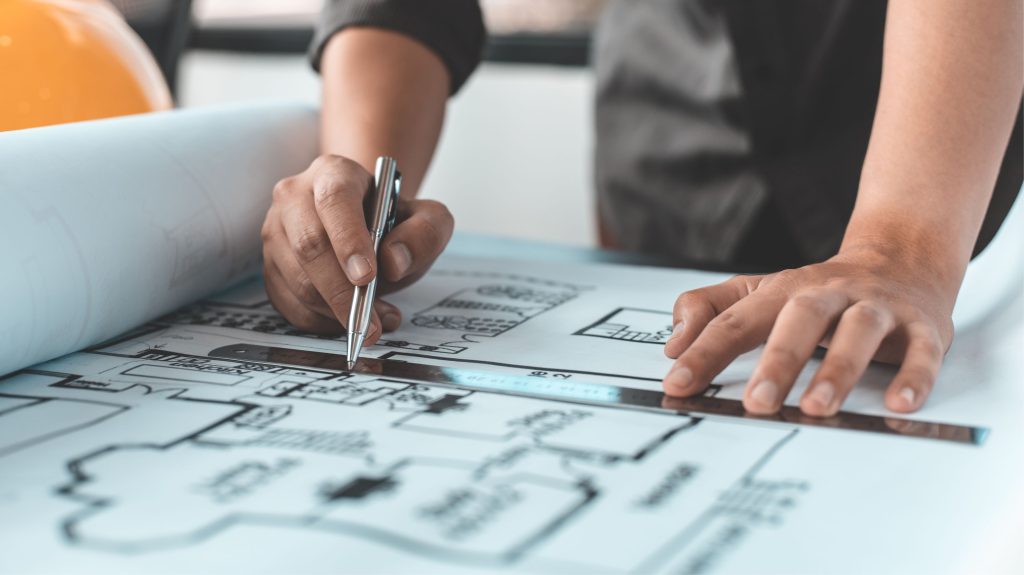
To realize where the industry is going, we should first look at the foundation. What is 2D CAD software? 2D CAD in its major sense, is the digital evolution of the traditional drafting board. It enables designers to generate two-dimensional technical drawings—characteristically X and Y coordinates, demonstrating the length and height or length and width of an object. These drawings are broadly flat representations used to convey technical information through standardized symbols, line weights, and annotations.
Innovation M Engineering Services identifies that despite the rise of 3D, CAD design and 2D drafting services remain a foundation of the AEC (Architecture, Engineering, and Construction) and manufacturing sectors. As part of its comprehensive project management and engineering services, 2D drafting continues to serve as the worldwide language for floor plans, electrical schematics, and piping and instrumentation diagrams (P&IDs). When a project demands quick permit approval or a straightforward layout for a fabrication shop, 2D CAD is generally the most efficient path forward. It delivers a clear, brief, and non-ambiguous set of instructions that global contractors have been trained to interpret for decades.
What is 3D CAD Modeling Software?
We enter the world of spatial depth and simulation when we go on the other side of the spectrum. What is 3D CAD modeling software? This technology enables the generation of virtual objects in a three-dimensional space, adding the Z-axis (depth) to the equation. A 3D model is not only a picture; it is a mathematical illustration of a physical part, that contains data about volume, surface area, mass, and material properties.
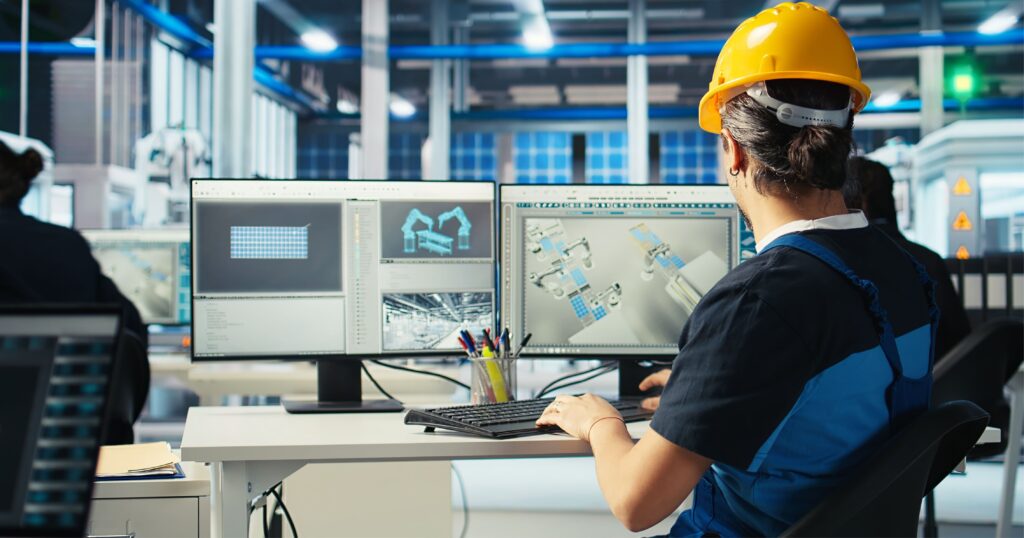
By applying 3D CAD modeling services, companies can generate “digital twins” of their products. This enables advanced testing like stress analysis, thermal simulation, and fluid dynamics before a single physical component is built. At IMES, we leverage 3D modeling to facilitate our clients visualizing complex assemblies, confirming that every bolt, bracket, and beam fits perfectly within the intended space. This level of foresight is a symbol of the premium engineering solutions we provide to our global clientele.
Detailed Analysis: 2D vs 3D CAD Advantages Disadvantages
When deciding on a workflow, it is critical to weigh the pros and cons of each method against your exact project goals. Below, we break down the core strengths and weaknesses of both strategies.
Advantages of 2D CAD
- Low Learning Curve and Accessibility: One of the prime reasons that many firms continue to hire CAD drafter professionals having 2D expertise is the speed of onboarding. The tools are intuitive for anyone who has a background in traditional drafting.
- Minimal Hardware Requirements: Unlike 3D modeling, which involves heavy-duty GPUs, 2D drafting can be completed on standard office laptops, lowering the initial capital expenditure on hardware.
- Speed for Simple Tasks: For generating basic layouts, wiring diagrams, or simple mechanical components, 2D works significantly fast. There is no need to outline complex constraints or material properties.
- Legacy Data Compatibility: A vast number of existing engineering drawings are stored in 2D formats (like DWG). For many maintenance and renovation projects, remaining in a 2D environment is simply more practical than restructuring decades of archives in 3D.
Disadvantages of 2D CAD
- High Risk of Human Error: A change in one view does not automatically update the others because 2D drawings are separate views (top, side, front),. This manual process is prone to variations that can lead to catastrophic errors during construction.
- No Automated Clash Detection: In a 2D environment, it is almost impossible to visualize if a structural beam will interfere with a ventilation duct until the components are physically established on-site.
- Limited Stakeholder Engagement: Reading a flat blueprint is difficult for clients who are non-engineers. This lack of visualization may result in misunderstandings and late-stage design changes that expand the budget.
Advantages of 3D CAD
- Parametric Accuracy: In 3D modeling, all views are drawn from a single source of truth. If you change even the diameter of a hole in the 3D model, every associated 2D drawing, section, and Bill of Materials (BOM) is updated automatically.
- Interference Checking: Modern 3D CAD modeling services take in automated “clash detection.” The software will highlight precisely where two parts occupy the same space, enabling for fixes during the design phase.
- Realistic Rendering and Animation: 3D models can be used to generate photorealistic images and fly-through animations. This is a unique tool for marketing, investor pitches, and stakeholder buy-in.
- Seamless Manufacturing Integration: 3D models can be exported directly to CNC machines, 3D printers, and laser cutters, that drastically reduces the time between design and physical reality.
Disadvantages of 3D CAD
- High Complexity and Cost: The software licenses are costly, and the hardware required to run them, i.e. high-speed processors and specialized graphics cards, represents a substantial investment.
- Time-Intensive Initial Setup: Establishing a high-fidelity 3D model needs more time upfront than a 2D sketch. You should define relationships, constraints, and material properties correctly from the start.
- Specialized Training Required: It is difficult to hire CAD drafter talent who can navigate complex parametric assemblies effectively without a high salary premium.
The IMES Edge: Secure Engineering Solutions in the Cloud
Innovation M Engineering Services (IMES) knows that the modern engineer wants more than just software; they demand a secure environment to collaborate. This is where our uniqueness as a private cloud provider becomes a game-changer.
Most 3D CAD files are enormous and sensitive. Moving these files over public networks or storing them on unsecured local servers puts at risk to your intellectual property. IMES offers a dedicated, high-speed private cloud infrastructure where your 3D CAD modeling services are executed. This empowers your team to work together on heavy 3D assemblies in real-time from anywhere in the world, with the latency-free performance that is commonly reserved for local workstations.
Our engineering solutions are built on three pillars:
- Precision: Operating the best of 2D and 3D workflows.
- Security: Protecting your designs through our proprietary private cloud.
- Scalability: Enabling you to scale your design team up or down based on project demands without worrying about infrastructure blocks.
Why You Should Hire a CAD Drafter from IMES
When you decide to hire CAD drafter professionals from Innovation M Engineering Services, you aren’t just getting an engineer; you are getting a partner who knows the lifecycle of a product. Our drafters are skilled in both CAD design and 2D drafting services and the recent 3D parametric modeling techniques.
We guarantee that every drawing we produce, whether it’s a simple 2D schematic or a complex 3D assembly, is optimized for its end use. We look at the “manufacturability” of your designs, proposing adjustments that save on material costs and assembly time. By outsourcing your drafting requirements to IMES, you free up your central engineering team to focus on innovation while we conduct the technical documentation and spatial validation.
Conclusion: Driving Innovation Through Precision
The selection between 2D and 3D isn’t about which technology is “better”; it’s about which tool offers the most value for your exact stage of development. 3D provides the depth and safety net needed for complex modern engineering while 2D provides unmatched speed for documentation.
Innovation M Engineering Services is committed to delivering world-class engineering solutions that help you navigate these options. As a trusted private cloud provider and a leader in technical design, we guarantee that your move between 2D and 3D is smooth, safe, and highly productive. We bridge the gap between imagination and performance, giving your business the competitive edge that it deserves.